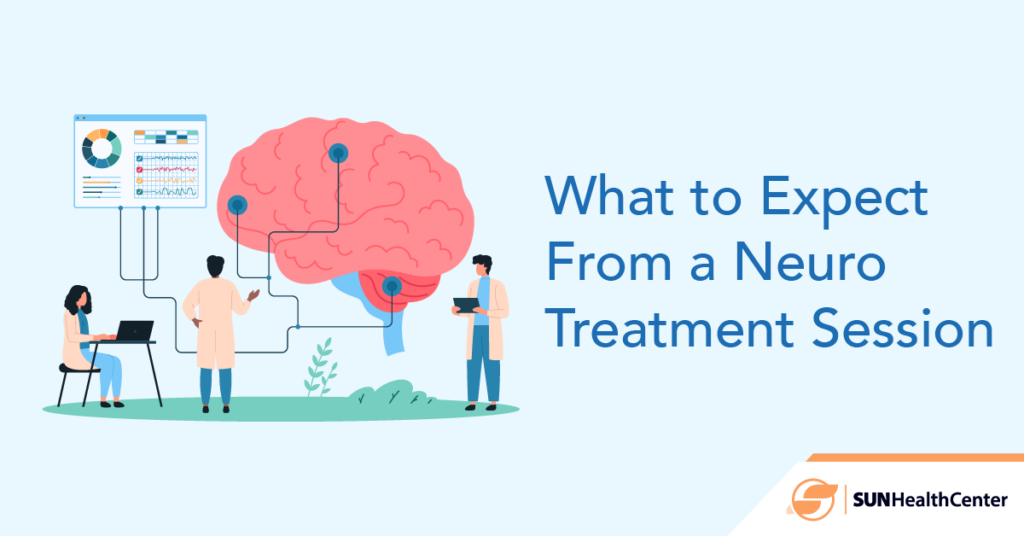
Brain-based therapies can feel intimidating if you’ve never experienced them before. Many people arrive with questions about what to expect in neurofeedback, how a neuro treatment session works and whether it will feel too technical. Sun Health Center’s neurorehab program offers structured support to help you meet your treatment goals.
Neurotherapy blends advanced technology with personalized mental health care. Rather than simply talking about symptoms, neuroscience-based methods work directly with how the brain functions. Clinicians actively track your progress during sessions and adjust care as your brain responds. Understanding what the process looks like ahead of time can help you feel more prepared and confident as you begin treatment.
What Is Neurological Treatment in Mental Health?
Neurotherapy focuses on how brain activity affects your thoughts, emotions and behavior. Clinicians observe measurable brain patterns and how they relate to symptoms. With consistent treatment, individuals using neuro-based care can experience significant improvements in mental health.
Mental health neurotherapy relies on information from the nervous system, often gathered through electroencephalogram (EEG) monitoring. These readings show patterns associated with conditions such as anxiety, depression, trauma and attention deficit hyperactivity disorder (ADHD). Treatment is then shaped around those patterns and helping the brain move toward more stable function.
Each neurological treatment session builds on the last, so data collected during sessions helps clinicians adjust timing, intensity or techniques as needed. The exact treatment plan evolves based on how your brain responds.
Conditions That May Benefit From Neuro-Based Care
Neuro-based care can support a wide range of mental health concerns by addressing how the brain regulates stress, attention, mood and emotional control. Our clinicians use neurological data to determine whether this approach fits your needs and how it should integrate with other therapies.
People often seek neuro-based care for the following conditions:
- Anxiety disorders. Irregular brain activity can keep the nervous system stuck in a heightened state of alert. Neurotherapy promotes calmer, more regulated mental patterns.
- Depression. Certain brainwave patterns correlate with low mood and reduced motivation. Targeted neuro treatment sessions aim to support healthier activity linked to emotional balance. This may help individuals whose depression has resisted other treatments.
- Trauma and PTSD. Trauma can disrupt how the brain processes threats and safety. Neuro-based care helps the brain relearn regulation without requiring repeated verbal recounting of traumatic events. One meta-analysis of neurofeedback showed moderate improvement in PTSD symptoms for 79% of neurofeedback patients, compared to about a quarter in control groups.
- ADHD. Difficulty with focus and impulse control often reflects specific brainwave imbalances. Neurofeedback can help improve attention and consistency over time.
- Substance use and co-occurring disorders. Brain dysregulation can increase cravings and emotional instability. Neuro-based care may support recovery by strengthening self-regulation and stress tolerance.
Neurotherapy does not replace other forms of treatment. It often works best alongside approaches such as psychotherapy or cognitive behavioral therapy to support more comprehensive mental health care.
How to Prepare for Your First Session
Preparing for a neuro treatment session is straightforward. Most sessions take place in a quiet, comfortable setting and last around 30 to 60 minutes. You’ll remain seated and awake during treatment.
A few simple steps can help your first session go smoothly:
- Get a normal night of sleep. Fatigue can affect brain activity and make it harder to capture a clear baseline.
- Eat and hydrate as usual. Skipping meals or arriving dehydrated can influence focus and comfort during the session.
- Avoid excess caffeine or stimulants. Large amounts of caffeine may alter brainwave patterns and affect session quality.
- Wash your hair and avoid styling products. Clean hair helps sensors make proper contact with the scalp.
- Bring questions or concerns. Your care team will use this information to align treatment with your goals and symptoms.
Common Tools and Techniques Used in Neurotherapy
Neurotherapy relies on a small set of clinical tools to observe brain activity and guide treatment. At Sun Health Center, we use these tools to support ongoing care by showing how the brain responds from session to session.
Common tools and techniques for neurotherapeutic care include:
- EEG brain mapping. Electroencephalogram technology records electrical signals in the brain. These readings help identify patterns linked to mood regulation, stress response and attention.
- Neurofeedback training. Neurofeedback uses EEG data to provide real-time feedback while you remain relaxed and awake. Visual or audio cues respond to brain activity and reinforce more stable patterns through repetition.
- Transcranial magnetic stimulation (TMS). TMS delivers focused magnetic pulses to specific brain regions. Sessions take place in a chair with no sedation.
- Computer-based cognitive exercises. Structured digital tasks may be used to support focus, processing speed, and mental flexibility. These exercises often complement neurofeedback sessions.
- Integrative therapy. Neurotherapy work is commonly paired with talk therapy or cognitive behavioral therapy to address emotional and behavioral patterns alongside brain regulation.
Each tool serves a specific purpose within the treatment plan. As the clinician monitors your responses, the session structure can be adjusted over time to support steady progress.
What Happens During and After Treatment Over Time
Treatment unfolds across multiple sessions. Each session builds on the previous one, allowing clinicians at Sun Health Center to observe changes and fine-tune the plan. During neurofeedback, your brain receives real-time feedback that reinforces healthier activity patterns. Other techniques, such as TMS or cognitive exercises, work in targeted ways to address specific brain functions.
Reactions after a session vary. Some people notice mental clarity, calm or improved focus, while others experience mild fatigue or temporary headaches. These responses often lessen as the brain adjusts to training. Clinicians regularly record and review these symptoms to guide care.
Treatment schedules differ by condition and individual response. Some people begin with several sessions per week, then taper as improvements stabilize. Others follow a steadier pace over a longer period. Tracking progress ensures that care adapts to your needs rather than remaining fixed at the initial plan.
Reclaim Your Brain Health
If you’re considering neurotherapy and want to learn whether it fits your needs, Sun Health Center can help you take the next step. Our team provides individualized neuro treatment sessions as part of comprehensive mental health care. Reach out today to begin your path toward recovery.