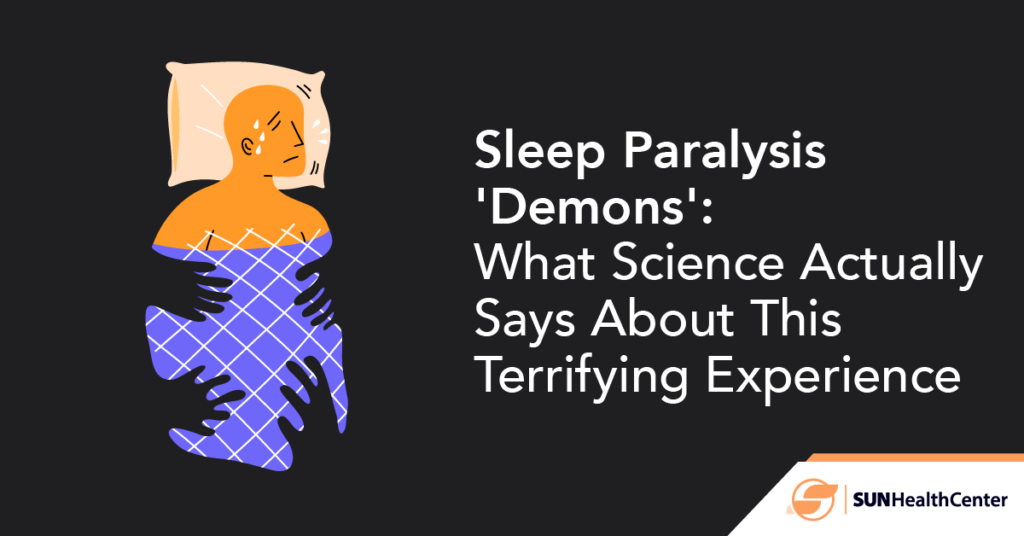
Sleep paralysis “demons” are a common hallucination that can occur during sleep paralysis. During this, the brain wakes up, but the body remains in REM sleep paralysis. People may see, hear or sense a presence in the room that feels threatening. While this can feel very real and frightening, it’s harmless. Sleep paralysis is easily explained by neuroscience.
Waking up and discovering that you’re unable to move can be deeply unsettling. For many people, this immobility, called sleep paralysis, comes with a sense that something or someone is in the room. This feeling, combined with the inability to either protect oneself or leave the room, is often scary. Online forums and videos frequently describe these encounters with so-called sleep paralysis demons, offering sensationalized paranormal explanations.
Despite pop culture explanations, sleep paralysis is a well-documented neurological experience. During an episode, your brain is awake, but your body is still unable to move as part of the normal sleep cycle. At the same time, your mind might continue to create dream imagery. This combines with waking awareness and may create frightening hallucinations.
Understanding what’s happening during sleep paralysis takes the mystery out of the experience and can make it feel far less scary.
The Neuroscience of Sleep Paralysis
Sleep paralysis occurs when the brain wakes up, but the body is still in a sleep state. A 2023 study explains how the muscles are paralyzed, which is a normal part of Rapid Eye Movement (REM) sleep called REM atonia.
During this period, dream imagery spills over into waking awareness and causes hallucinations. The brain’s fear centers are active during this time, which is why hallucinations tend to feel threatening even though the body is safe.
Why People See or Sense Demons and Intruders
A person sees demons during sleep paralysis because of how the brain tries to interpret sensory information while in a paralyzed state. Fear heightens this experience, and the mind fills in information gaps with familiar threat imagery. For some people, that involves demons or shadow figures during sleep paralysis, while others perceive intruders.
Sleep Paralysis Across Cultures and History
Accounts of sleep paralysis hallucinations go back centuries. Long before scientists and doctors understood sleep cycles, there were records of immobility and threatening presences. A 2015 study describes how, for hundreds of years, people have described visitations by malevolent beings. Ancient Chinese texts contain references to sensations of heavy presences on the body during wakefulness. In 1664, a Dutch physician provided an early clinical description of this experience, combining his understanding of the episode with folklore for a diagnosis of “Incubus or the Night-Mare.”
Who Gets Sleep Paralysis and Why
Anyone can experience sleep paralysis, but it’s more common in teens and young adults. People with irregular sleep schedules or heightened stress are also more likely to have an episode. Conditions such as post-traumatic stress disorder and narcolepsy increase the risk, as do genetics, sleep deprivation or sleeping on one’s back.
Is Sleep Paralysis Dangerous?
In most cases, sleep paralysis is harmless. Even though the person can’t move, their breathing continues normally. Additionally, the danger they sense is a product of their imagination. Frequent episodes, however, can disrupt sleep and affect overall health. If you regularly have sleep paralysis, talk to a healthcare provider to rule out possible causes.
How to Reduce or Stop Episodes
While you may not be able to completely eliminate sleep paralysis episodes, there are several steps you can take to reduce their frequency. These include:
- Maintaining a consistent sleep schedule
- Reducing stress
- Practicing good sleep hygiene
- Avoid sleeping on your back
Tracking patterns in a sleep journal can help you assess frequency and identify possible triggers.
When It Signals a Larger Neurological Concern
While sleep paralysis is rarely something to be concerned about, frequent episodes can point to a sleep disorder. REM-related conditions such as narcolepsy and sleep apnea can increase your likelihood of experiencing an episode. Consider talking to a sleep or neurological specialist to rule out these conditions.
How SHC Approaches Sleep and Neurological Health
Occasional sleep paralysis episodes are usually harmless and don’t indicate an issue. However, frequent episodes can sometimes be a sign of underlying neurological or sleep-related issues.
At Sun Health Center, we specialize in understanding how the brain and nervous system affect sleep quality, mood and overall well-being. Our specialists evaluate a variety of neurological and physiological factors that may contribute to sleep disturbances.
We offer a range of therapies to support brain health and nervous system regulation. Depending on the individual’s needs, treatment may include neurotherapy, psychotherapy or other interventions designed to manage stress and improve sleep quality. By addressing what causes sleep paralysis, many people achieve more stable sleep patterns and fewer sleep paralysis episodes.
FAQ
- Can sleep paralysis happen more than once in a night?
Yes, sleep paralysis can happen more than once in a night. Some people experience multiple episodes, especially if they wake repeatedly during REM sleep and fall back asleep quickly. - Why do I feel pressure on my chest during sleep paralysis?
Chest pressure is one of the most commonly reported sensations during sleep paralysis. It happens because the muscles that control breathing are more relaxed and behave differently during REM sleep. When someone is afraid, their breathing usually speeds up. Because the relaxed muscles don’t allow for that, the individual may feel pressure on their chest. Despite this sensation, their oxygen levels remain normal. - Can sleep paralysis kill you?
No, sleep paralysis can’t kill you. Although the experience may feel frightening, breathing remains steady, oxygen levels stay normal and the episode usually resolves within a few seconds to a few minutes. However, if sleep paralysis occurs often, it’s a good idea to speak with a healthcare professional to rule out underlying sleep disorders.
Treating Sleep Paralysis with Sun Health Center
Sleep paralysis can feel scary, but understanding the experience can make it feel less mysterious. While experiencing an occasional episode is normal, frequent events may indicate an underlying issue. At Sun Health Center, we can help you address factors that may be impacting your nervous system and sleep patterns. If sleep paralysis is affecting you, contact us today for a professional evaluation.